Guide
Tokyo Racecourse for Uma Musume Fans
Tokyo Racecourse is the real home of the Japanese Derby and the Japan Cup. Which famous winners raced here, where to find them in the JRA museum's Hall of Fame, and the photo rules to know.
By Tama Travel GuideFacts checked: 6 sources
At a glance
- Best for
- Fans of the real horses behind the game
- Cost
- Entry ¥200 on most race days; museum free
- Best season
- Derby May 31; Japan Cup Nov 29 (2026)
Contents
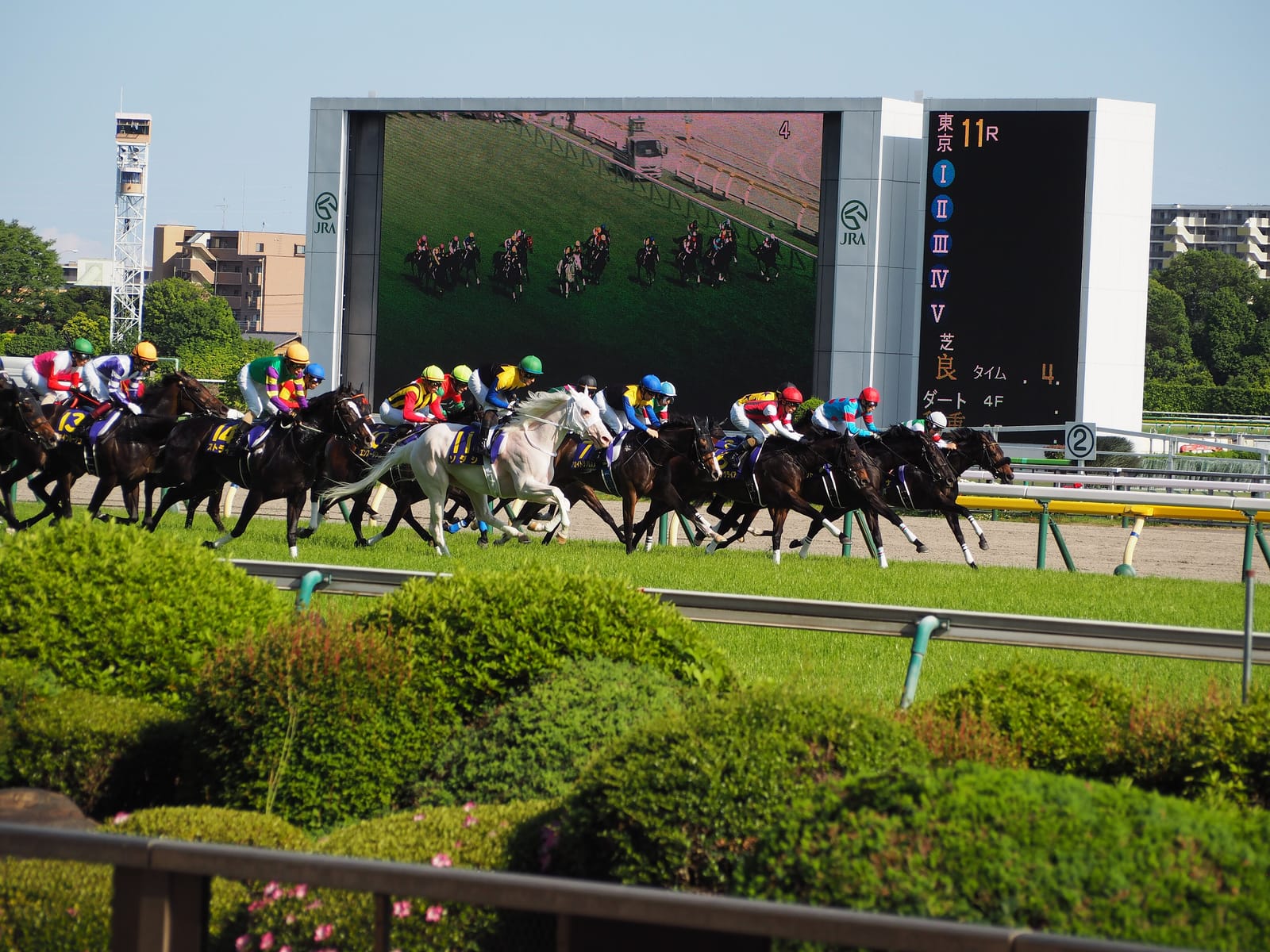
If you know Japanese racing through Uma Musume Pretty Derby, Tokyo Racecourse (東京競馬場) is the real-world track behind many of its biggest races. It is home to the Japanese Derby (Tokyo Yushun), the Japan Cup and the Tenno Sho (Autumn). Real horses that share their names with the game’s characters won here, including Symboli Rudolf, Tokai Teio, Special Week and Vodka. Inside the grounds, the free JRA Racing Museum holds the Hall of Fame, where many of these horses are honoured.
One thing to be clear about: as of October 2026, JRA’s event list for the autumn 2026 Tokyo meeting does not include an Uma Musume collaboration. This page is about the real racecourse, its races and its horses. It is not about an official game tie-in.
Real winners at Tokyo
From JRA’s official past results for two of Tokyo’s biggest races:
| Horse | Japanese Derby | Japan Cup |
|---|---|---|
| Symboli Rudolf (シンボリルドルフ) | 1984 (51st) | 1985 (5th) |
| Tokai Teio (トウカイテイオー) | 1991 (58th) | 1992 (12th) |
| Special Week (スペシャルウィーク) | 1998 (65th) | 1999 (19th) |
| El Condor Pasa (エルコンドルパサー) | – | 1998 (18th) |
| T.M. Opera O (テイエムオペラオー) | – | 2000 (20th) |
| Vodka (ウオッカ) | 2007 (74th) | 2009 (29th) |
| Kitasan Black (キタサンブラック) | – | 2016 (36th) |
The Derby and the Japan Cup are both run on Tokyo’s turf course. The home straight is 525.9 m long and has an uphill section, from 460 m to 300 m before the finish. The track runs counter-clockwise (left-handed), which only Tokyo, Chukyo and Niigata do among JRA’s courses.
The Hall of Fame at the JRA Racing Museum
JRA honours horses that made a special contribution to Japanese racing. Their bronze statues and portraits are displayed at the JRA Racing Museum inside Tokyo Racecourse. Hall of Fame horses whose names fans of the game will recognise include:
- Mr. C.B. (inducted 1986) and Maruzensky (1990)
- Symboli Rudolf (inducted 1987) and Oguri Cap (1991)
- Mejiro McQueen (1994) and Tokai Teio (1995)
- Narita Brian (1997) and Taiki Shuttle (1999)
- T.M. Opera O (2004) and El Condor Pasa (2014)
- Vodka (2011). The museum’s English page features her bronze statue.
- Kitasan Black (2020)
The museum is free. On Tokyo race days you need the racecourse entry (usually ¥200). On weekdays you enter through the East Gate. Check the closed days first. See our museum guide for hours and the “RIDE ON GI HORSE” machine, which plays real G1 race footage.
Seeing the races in person
What’s different about watching live:
- The paddock (パドック). Horses walk here before each race. It’s the closest you’ll get to them.
- Horse Preview, Fuji View Stand 1F. On Tokyo race days you can see horses and jockeys on their way to and from the track.
- The fanfare. Big races get live fanfares. On Tenno Sho (Autumn) day 2026, JRA lists a live fanfare at the winner’s circle at 15:40.
- The crowd. The roar down the long Tokyo straight is something you don’t get from a screen.
Which day? The G1s at Tokyo in 2026 were or are: February Stakes (February 22), NHK Mile Cup (May 10), Victoria Mile (May 17), Japanese Oaks (May 24), Japanese Derby (May 31), Yasuda Kinen (June 7), Tenno Sho (Autumn) (November 1) and Japan Cup (November 29). The Derby, Tenno Sho (Autumn) and Japan Cup need advance online tickets. See big race days. A normal race day is far easier for a first visit. See Tokyo Racecourse for first-timers.
Want a ticket with a horse’s name on it as a souvenir? A “support ticket” (応援馬券) is a Win and Place bet on one horse, printed with the horse’s name and “がんばれ!” (“Go for it!”). Betting is for over-20s only. See how to bet.
Photo and fan etiquette
JRA’s spectator rules (as of October 2026) ask visitors not to:
- use flash where horses are, because it can startle them,
- use tripods or anything that stands on its own, or stand on steps or stepladders to shoot,
- take photos or video for commercial purposes, or anything beyond personal use,
- live-stream, or post recordings publicly in ways that go beyond personal use,
- infringe other visitors’ or staff members’ portrait rights, or anyone’s copyright or trademarks.
JRA also asks fans to be considerate toward jockeys travelling to the racecourse, and it publishes a notice about this. Pets aren’t allowed inside (guide, service and hearing dogs excepted).
Goods and souvenirs
The Turfy Shop (ターフィーショップ) sells JRA’s own racing goods, including items featuring its horse mascot Turfy. It has branches on Fuji View Stand 2F and 3F and Memorial 60 Stand 2F, and is open from gate opening until 17:00 on Tokyo race days. Game merchandise isn’t something JRA lists there, so don’t expect it.
For a calmer pilgrimage, combine a weekday museum visit with a walk from Okunitama Shrine. See the Fuchu walk.
Prices and hours change. Check the official site before you go.